Why Nothing Resets in Crit Happens
From the beginning, Crit Happens was never meant to be a show where the story protects the players. It was built to be a space where the story responds to them. That distinction matters more than any rule system or encounter design choice.
Story without consequence becomes noise. Consequence without story becomes punishment. The balance lives in the space between those two extremes.
At our table, story is not a script. It is a living structure shaped by decisions, timing, and pressure. Characters are free to act, but the world is free to answer. Nothing exists in a vacuum. Every choice leaves a mark, even if that mark does not show up immediately.
This philosophy came from experience, not theory.
Early on, I learned that players do not need to be pushed toward drama. They create it naturally when their choices matter. When consequences are consistent and fair, players lean into risk instead of avoiding it. They stop asking what they are allowed to do and start asking what they are willing to live with.
That shift changes everything.
In Crit Happens, success does not erase danger. Failure does not end a story. Both move the world forward. A mission completed poorly still changes political tides. A failed negotiation still reveals who holds power. A reckless victory still creates enemies.
Nothing resets because it feels convenient.
This approach requires trust. Players need to know the table is not out to get them, but also not out to save them. The rules apply evenly. The world reacts honestly. When something goes wrong, it goes wrong for a reason that can be traced back to a choice, a risk, or a moment of uncertainty.
That clarity builds confidence.
When players trust the system, they make bolder decisions. They stop optimizing for safety and start acting in character. Emotional choices replace mechanical ones. Those decisions often cost more, but they also matter more.
That is where story becomes memorable.
As a Dungeon Master, this balance means resisting the urge to intervene. It means letting silence stretch. Letting bad rolls stand. Letting victories feel earned and losses feel real. It means allowing the world to remember what the players did instead of forgiving it between sessions.
Cities change. Factions respond. NPCs carry grudges or gratitude forward. Contracts echo beyond their completion. The consequences are not always immediate, but they are always present.
This structure also protects the story from feeling arbitrary. Nothing happens just because it would be dramatic. Drama emerges from alignment or conflict between goals, timing, and information. When something catastrophic occurs, the table can usually point to the moment where things tilted.
That understanding removes resentment. Players may regret a choice, but they rarely question the fairness of the outcome.
Crit Happens also avoids consequence overload. Not every mistake becomes a disaster. Not every failure escalates into tragedy. The world applies pressure proportionally. Small missteps create friction. Large ones reshape arcs.
This pacing keeps the game playable while preserving weight.
Consequences are layered instead of stacked. A single action might affect reputation, alliances, and future access rather than dealing immediate damage. This gives players room to respond, adapt, and recover without erasing what happened.
Recovery is part of the story. So is fallout.
Balancing story and consequence also means respecting player intent. Characters are allowed to fail while trying to do the right thing. The world does not punish morality. It responds to visibility, leverage, and timing. Good intentions do not guarantee good outcomes, but they are never meaningless.
That distinction keeps the table from becoming cynical.
Crit Happens lives in that tension. Between freedom and fallout. Between intention and result. Between what characters want and what the world allows.
This balance is why arcs feel connected. Why sessions carry weight beyond their runtime. Why victories feel heavy and failures feel formative.
The story moves forward because something changed, not because a chapter ended.
That is the goal. Every time.
Crit Happens does not ask players to be heroes. It asks them to be accountable. The story follows naturally from there.
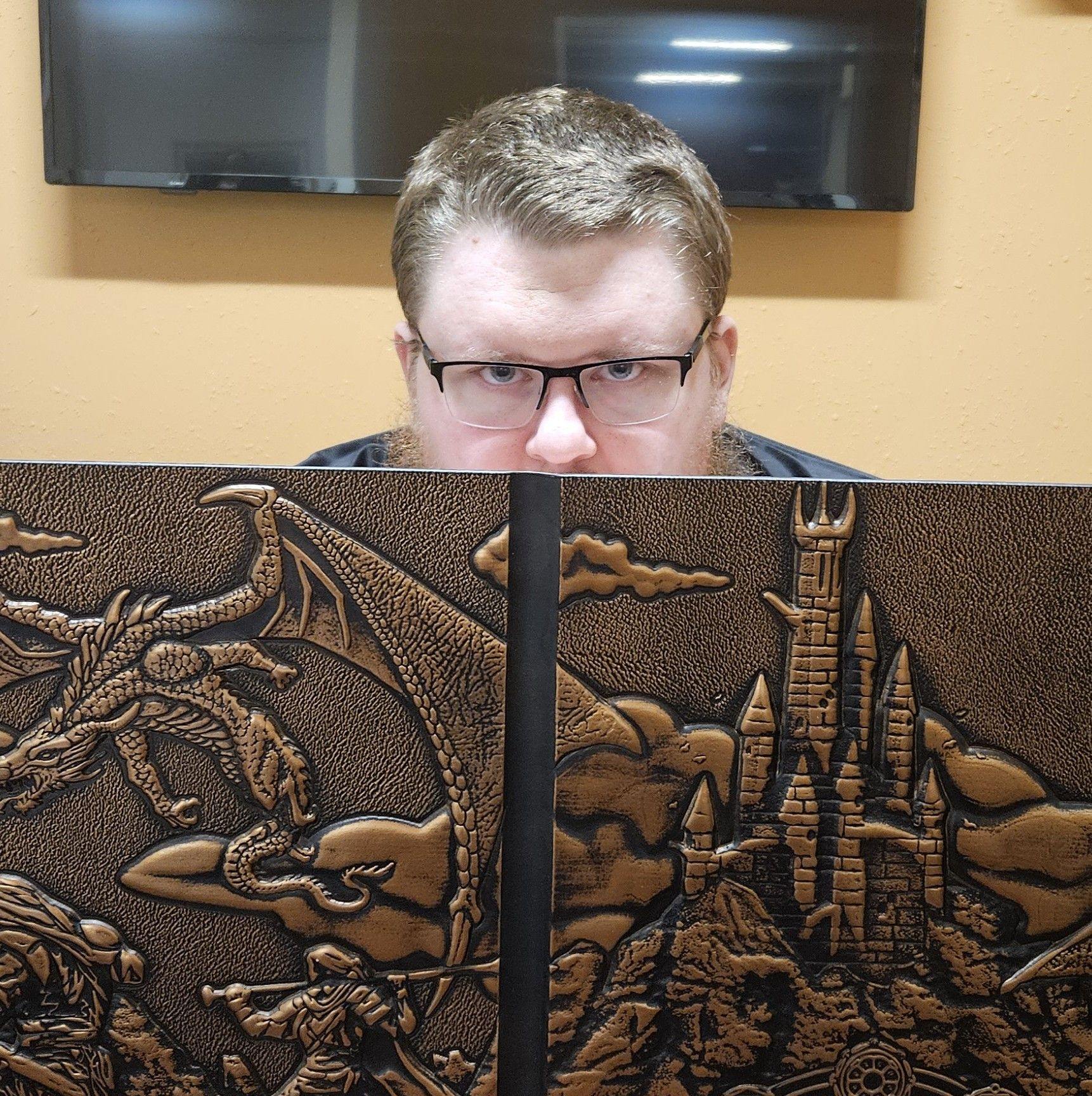
Host & Creator of Crit Happens
He is a lifelong gamer with a strong love for immersive worlds and shared experiences. He spends a lot of time in Fortnite for fast, competitive chaos, Baldur’s Gate III for deep storytelling and meaningful choices, and Phasmophobia for its tense teamwork and atmosphere. He is a huge nerd at heart and enjoys getting lost in lore, systems, and the small details that make games feel alive.
Music plays a constant role in his life. His taste pulls from many genres and moods, shifting with the moment rather than sticking to a single style. If a song has energy or emotion, it earns a place in his rotation.
He is a first time Dungeon Master running his first full campaign. Learning how to guide players, manage rules, and build memorable moments has been both challenging and deeply rewarding for him. At his core, he values connection. He loves meeting new nerds, sharing stories, and building community around a shared love of games and tabletop storytelling.
Why Community Matters More Than Numbers