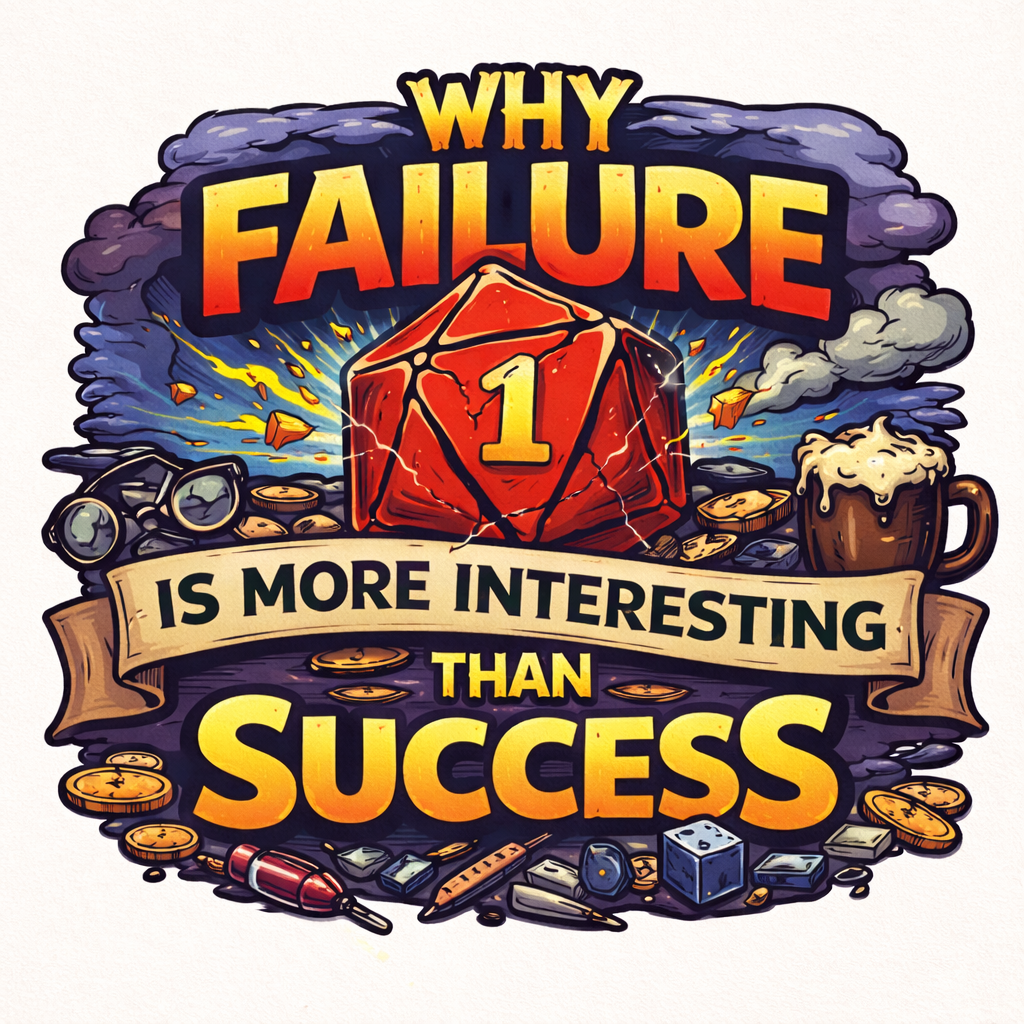
Why Failure Is More Interesting Than Success
Success feels clean. A plan works. A roll lands. The scene resolves and the table moves on. It is satisfying, but it rarely lingers. Failure behaves differently. Failure stays in the room. It forces everyone to slow down and respond instead of advancing to the next beat.
At the table, success often closes a door. Failure opens several. A missed attack changes positioning. A bad negotiation reshapes the power dynamic. A wrong choice forces improvisation. Those moments demand attention, and attention is where story grows.
Crit Happens was built around this idea because it mirrors real life more than perfect outcomes ever could.
Before the show existed, I failed in ways that had nothing to do with dice. My health deteriorated over time. My weight climbed while my habits stayed the same. I ignored warning signs because change felt harder than delay. That failure caught up to me in November 2024 when respiratory failure put me in a hospital bed for months.
There was no clean reset. There was no victory condition. Recovery was slow, uncomfortable, and humbling. I had to sit with consequences instead of bypassing them. I had to adjust instead of powering through.
That experience changed how I view failure, both in life and at the table.
In Dungeons and Dragons, failure is often treated as something to avoid or soften. Rerolls appear. Safety nets activate. Outcomes get smoothed over to keep things moving. I understand why. No one wants a dead end. But avoiding failure also avoids growth.
At our table, failure is information. It tells you who your character is when control disappears. It shows what they cling to when plans collapse. Characters become honest under pressure in a way success never demands.
Some of our strongest sessions came from things going wrong. Missions spiraled. Allies turned cold. Dice landed badly at critical moments. Those failures forced characters to make hard choices and live with them. The fallout shaped future sessions instead of being erased between arcs.
As a Dungeon Master, embracing failure means letting the world respond honestly. Consequences do not vanish because they are inconvenient. Political enemies remember. Cities change. Characters carry scars forward. That continuity builds trust. Players know their choices matter because the world remembers them.
This also frees players to take risks. When failure leads to story instead of punishment, fear loosens its grip. Players stop chasing perfect solutions and start making meaningful ones. They follow instincts. They make emotional calls. They accept uncertainty.
That mindset exists because I learned it the hard way.
My hospitalization was not the end of my story. It was the moment the story demanded change. It forced me to listen, adjust, and rebuild. Crit Happens exists because I let that failure stand instead of hiding from it.
Success is nice. Failure is useful.
Success answers questions. Failure asks better ones. What now. Who do you trust. What are you willing to change.
Those questions drive real stories. At the table and beyond it.
That is why failure matters here. That is why we do not erase it.
That is why Crit Happens.
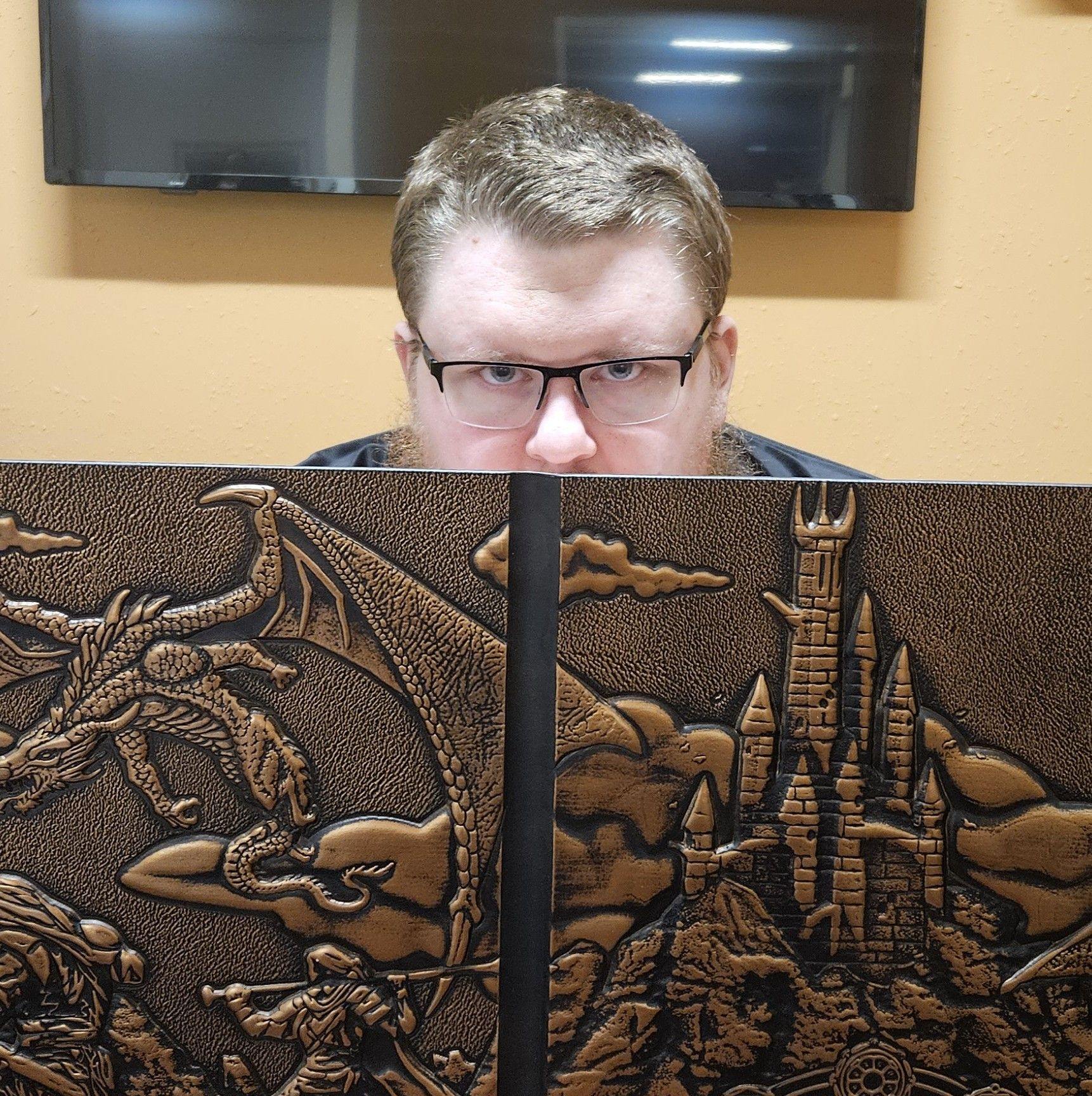
Host & Creator of Crit Happens
He is a lifelong gamer with a strong love for immersive worlds and shared experiences. He spends a lot of time in Fortnite for fast, competitive chaos, Baldur’s Gate III for deep storytelling and meaningful choices, and Phasmophobia for its tense teamwork and atmosphere. He is a huge nerd at heart and enjoys getting lost in lore, systems, and the small details that make games feel alive.
Music plays a constant role in his life. His taste pulls from many genres and moods, shifting with the moment rather than sticking to a single style. If a song has energy or emotion, it earns a place in his rotation.
He is a first time Dungeon Master running his first full campaign. Learning how to guide players, manage rules, and build memorable moments has been both challenging and deeply rewarding for him. At his core, he values connection. He loves meeting new nerds, sharing stories, and building community around a shared love of games and tabletop storytelling.
Why Community Matters More Than Numbers