Why Virelios Was Built for Mercenaries, Not Heroes
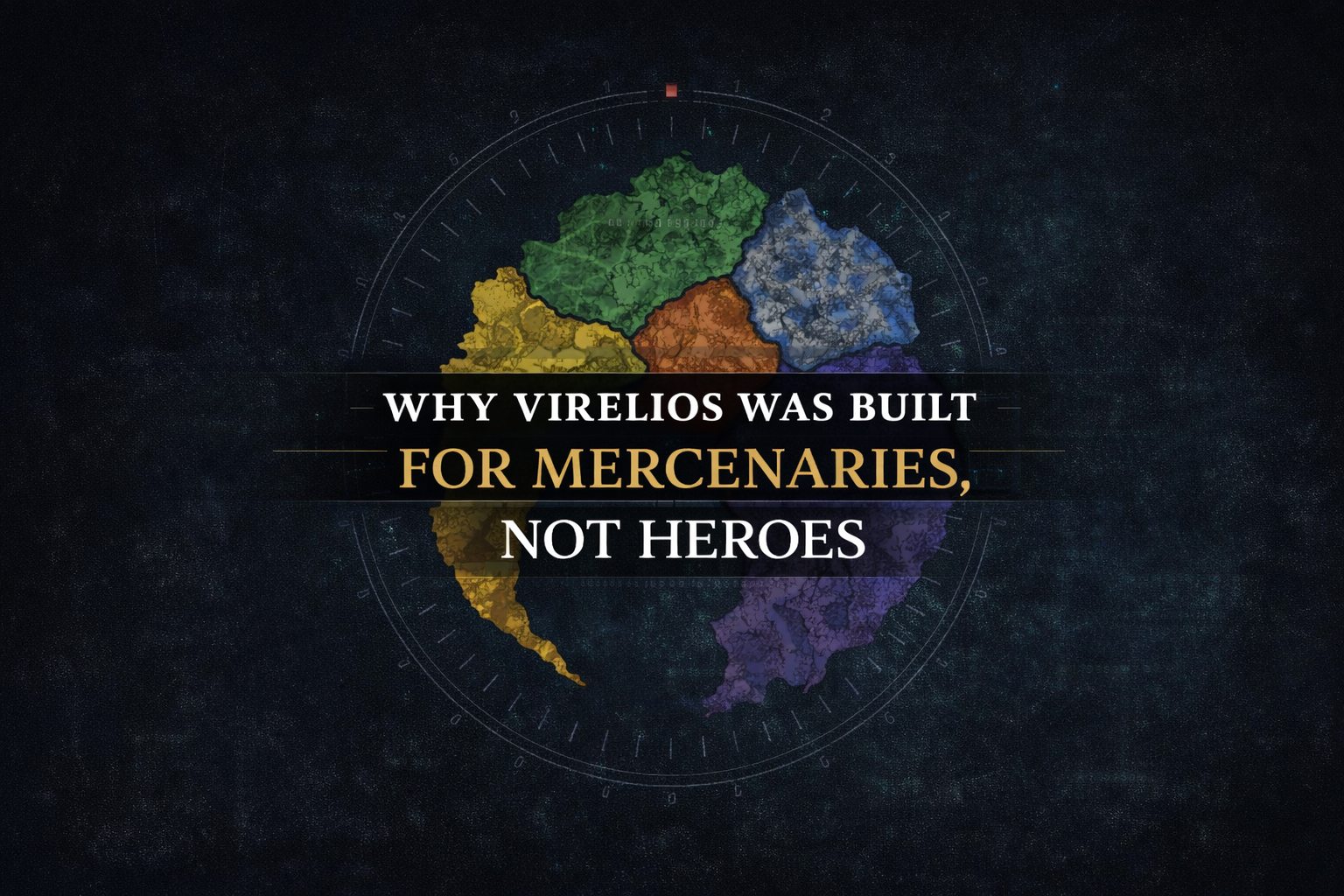
Most fantasy worlds are built around heroes. Chosen ones. Ancient prophecies. A cosmic voice somewhere in the clouds pointing at a farm kid and saying, “You are the one.”
Virelios rejects that outright.
From its earliest conception, Virelios was never meant to ask who would save the world. It was built to ask who would survive it, who would profit from it, and who would be willing to get their hands dirty when the truth was inconvenient. This is a world shaped by contracts, reputation, and consequences rather than destiny. Power is not bestowed. It is negotiated, stolen, earned, or lost.
That single design choice reshaped everything that followed.
In Virelios, no one is waiting for heroes to arrive. Cities hire problem solvers. Factions employ assets. Faiths make bargains. When something needs doing, someone puts coin on the table and hopes the right people answer the call. That is where the players enter the story, not as saviors, but as agents navigating a broken world that rewards results more than righteousness.
This mercenary-first philosophy immediately changes player behavior. Without prophecy as a safety net, players stop assuming they are protected by narrative gravity. Failure is possible. Abandonment is possible. Betrayal is possible. When survival depends on reputation instead of destiny, every choice carries weight beyond the current session.
Contracts become the spine of the campaign.
Rather than quests handed down by benevolent patrons, missions in Virelios are transactional by design. A contract outlines expectations, compensation, risks, and sometimes lies. The truth is rarely complete, and it is often deliberately obscured. This gives players meaningful leverage. They can negotiate terms, demand information, walk away, or accept consequences knowingly.
That framework empowers player agency in a way heroic prophecy never could. Choosing a contract is choosing a direction for the story. Declining one shapes the world just as much as accepting it. A faction remembers who turned them down. Another notices who stepped in instead.
Reputation replaces alignment as the true moral compass.
Virelios does not care if characters are good or evil in the abstract. What matters is what they are known for. Did they finish the job. Did they leave witnesses. Did they break terms. Did they protect their own. These reputations propagate through factions, ledgers, rumors, and consequences that persist long after a mission ends.
A mercenary who keeps their word but leaves collateral damage is treated differently than one who saves lives but fails objectives. Neither is inherently right or wrong, but both leave distinct marks on the world. Over time, players see doors open and close not because of class features or alignment choices, but because of accumulated trust or fear.
This also creates moral ambiguity that feels earned rather than imposed.
In a heroic fantasy, moral choices often come with clear signaling. A glowing sword. A sinister whisper. A divine warning. Virelios removes that scaffolding. Decisions are murky. Information is incomplete. Consequences unfold slowly. Players are rarely told which choice was correct, only which choice they made.
That ambiguity forces introspection. When a contract pays well but destabilizes a region, players must decide whether profit outweighs fallout. When refusing a job allows a worse actor to take it instead, players must reckon with inaction as a choice. These moments are not scripted morality tests. They arise naturally from a world that values outcomes over intentions.
Even power follows mercenary logic.
Magic in Virelios is costly. Divine forces are traumatized. Shards whisper with memory and consequence. Power is never free, and it is never clean. This mirrors the mercenary structure perfectly. Just as coin buys service, magic extracts payment. Just as contracts bind agents, pacts bind casters. The world reinforces its philosophy at every layer.
Heroes act because they must. Mercenaries act because they choose to. That distinction matters.
When players are not obligated to save the world, their moments of sacrifice become more meaningful. When someone risks everything without prophecy demanding it, that choice resonates. When a group walks away from profit to protect something fragile, it is not because the story requires it, but because they decided it mattered.
Virelios leaves room for heroism, but it never assumes it.
That is the quiet strength of building a world for mercenaries instead of heroes. It does not diminish hope. It makes hope deliberate. It does not remove morality. It makes morality costly. And it does not hand players a crown. It asks them what they are willing to do to earn one, or whether they want it at all.
In Virelios, the world will keep turning whether the players intervene or not. The question is not who is destined to act.
It is who signs the contract.
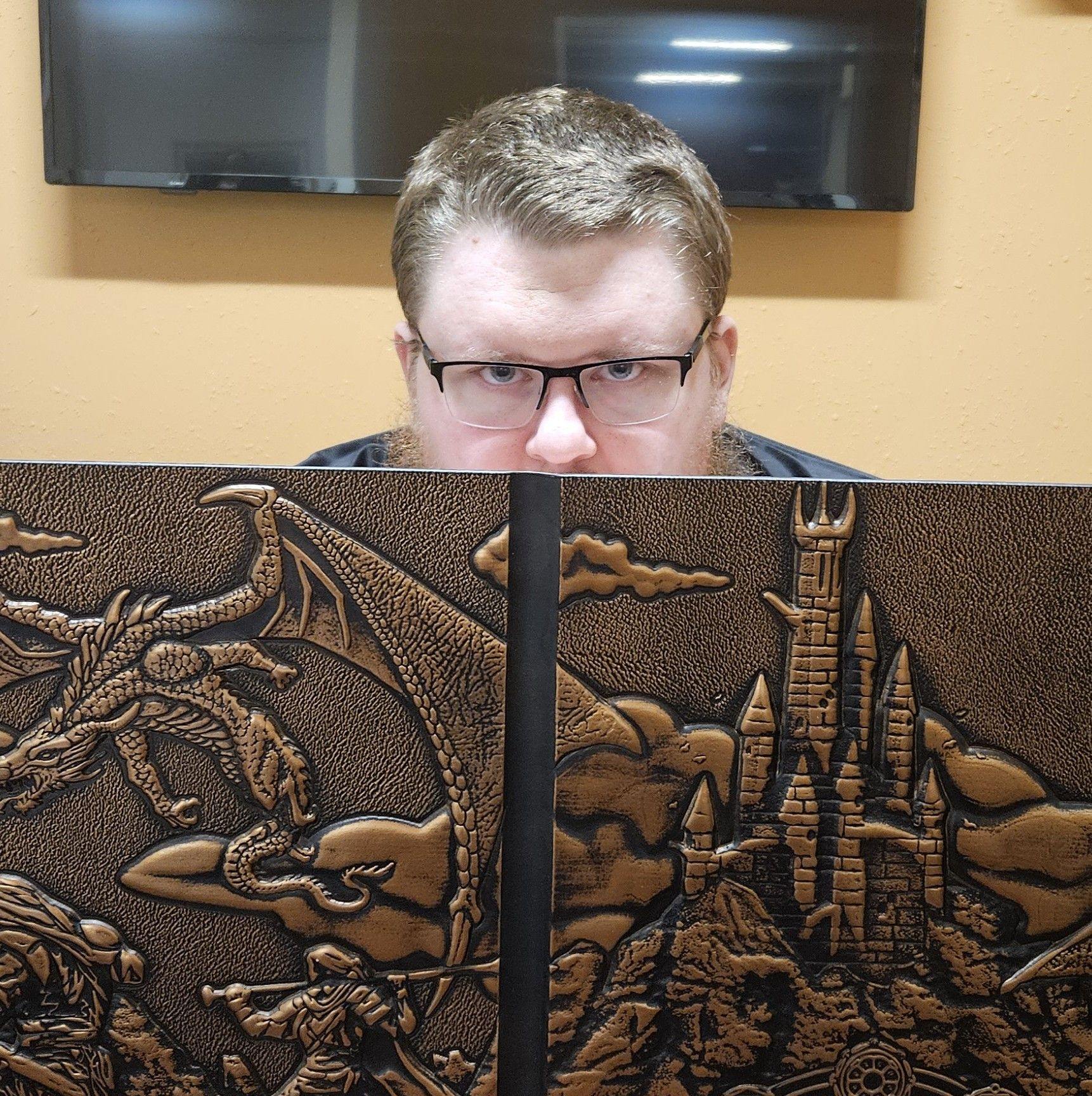
Host & Creator of Crit Happens
He is a lifelong gamer with a strong love for immersive worlds and shared experiences. He spends a lot of time in Fortnite for fast, competitive chaos, Baldur’s Gate III for deep storytelling and meaningful choices, and Phasmophobia for its tense teamwork and atmosphere. He is a huge nerd at heart and enjoys getting lost in lore, systems, and the small details that make games feel alive.
Music plays a constant role in his life. His taste pulls from many genres and moods, shifting with the moment rather than sticking to a single style. If a song has energy or emotion, it earns a place in his rotation.
He is a first time Dungeon Master running his first full campaign. Learning how to guide players, manage rules, and build memorable moments has been both challenging and deeply rewarding for him. At his core, he values connection. He loves meeting new nerds, sharing stories, and building community around a shared love of games and tabletop storytelling.
Why Community Matters More Than Numbers