Contracts Over Destiny: The Creation of Virelios
Virelios did not start with a map. It started with tone.
I wanted dark fantasy, but not the kind built only on cruelty or despair. I wanted a world where choices hurt, where power has a cost, and where survival does not equal virtue. A place where doing the right thing is harder than doing the safe thing.
That tone shaped everything that followed.
The first pillar of Virelios was structure. I needed a reason for characters to move, take risks, and accept dangerous work without forcing heroism. That is where the Scalebound Syndicate came from. A mercenary organization that offers missions, contracts, and rewards. You are not chosen by fate. You sign your name. You accept the job. You live with the outcome.
This allowed stories to stay grounded. Characters act because they chose to, not because prophecy demands it. Gold matters. Reputation matters. Failure matters.
Once the Syndicate existed, the world needed pressure.
Virelios became a place shaped by factions instead of nations. Power does not sit neatly behind borders. It moves through belief, memory, fire, and control. Most of the core factions were inspired by Greek ideals and conflicts. Not lifted directly, but echoed in structure and philosophy.
The Dominion of Fahlreach represents order, control, and the belief that stability justifies cruelty. It values law, hierarchy, and sanctioned truth. Like many ancient empires, it believes chaos is the true enemy and freedom is dangerous when left unchecked.
The Watchers Beneath stand in opposition without rebellion. They observe, record, and remember. They believe truth survives best when it is witnessed rather than enforced. Their power comes from patience and silence, not conquest.
The Hollow Host grew from a different idea. In many myths, the forgotten are powerless. I wanted the opposite. The Hollow Host draws strength from grief, erased names, and unfinished stories. They are not villains by default. They are a reminder that ignoring the past creates monsters of its own.
Each faction was designed to feel justified from the inside. No group exists to be defeated. They exist to challenge players with competing versions of truth. Every contract risks aligning you with one belief while angering another.
Fire, memory, and illusion became the core forces of the world because they mirror human conflict.
Fire destroys and creates. Memory defines identity. Illusion controls perception. These forces shape politics, religion, and magic in Virelios. They also shape the people living in it. Entire regions bear scars from divine flame. Cities rewrite history through illusion. Faiths guard memory like currency.
The world became darker as it became more honest.
Virelios does not promise justice. It offers consequence. It does not reward good intentions. It rewards preparation, sacrifice, and conviction.
The Syndicate ties all of this together. It gives players a reason to engage without pretending neutrality exists. Contracts place you inside conflicts that were already burning long before you arrived. You are never the center of the world. You are a factor in it.
That was always the goal.
Virelios was built to support long stories shaped by pressure. To let players choose who they work for, what they protect, and what they are willing to ignore. It is a world where alliances shift, truth fractures, and the cost of action is never hidden.
This world exists because dark fantasy works best when it reflects reality. Power corrupts. Memory fades. Control masquerades as safety.
And somewhere in the middle, mercenaries sign contracts and decide what kind of damage they are willing to leave behind.
That is Virelios.
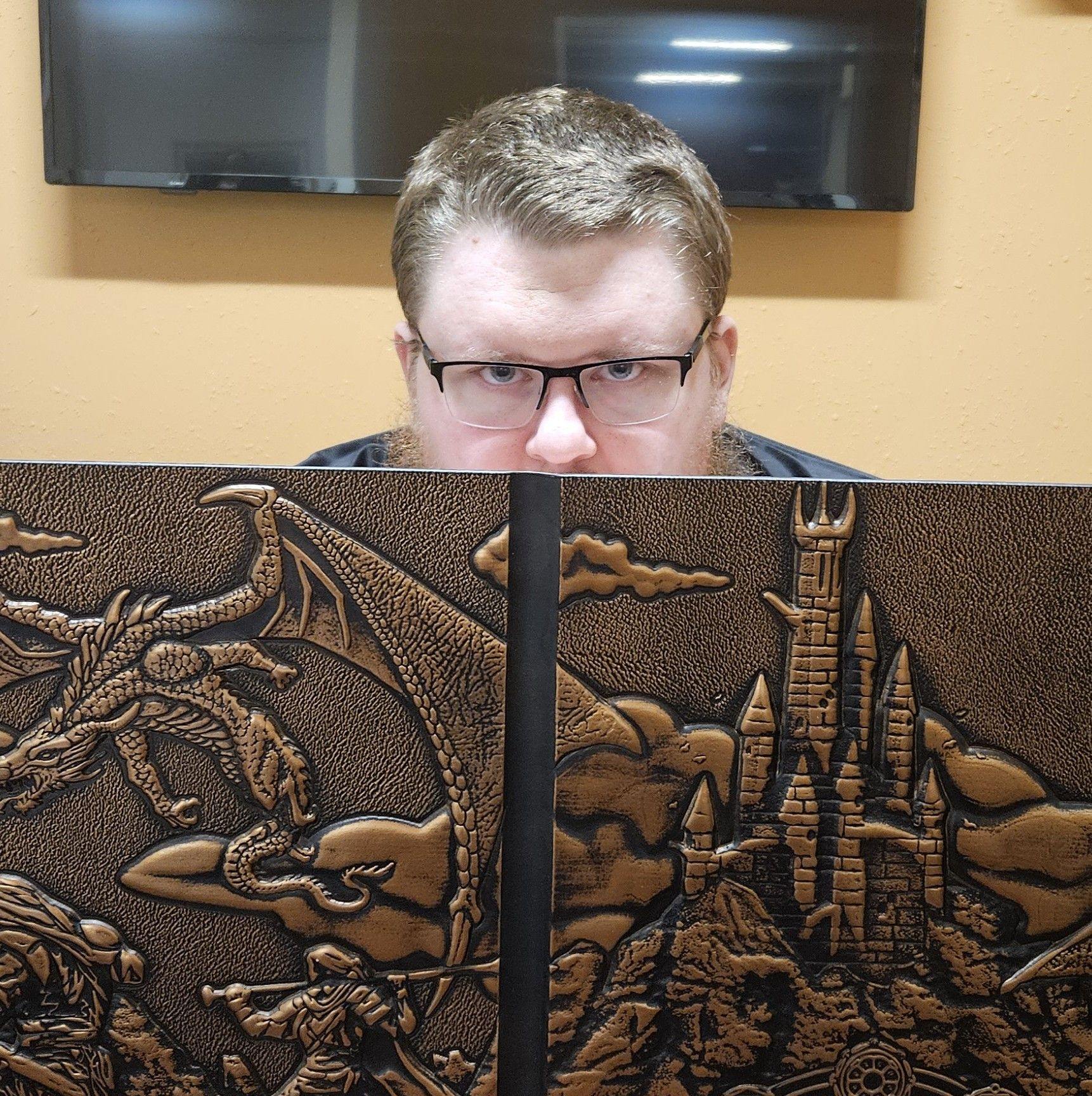
Host & Creator of Crit Happens
He is a lifelong gamer with a strong love for immersive worlds and shared experiences. He spends a lot of time in Fortnite for fast, competitive chaos, Baldur’s Gate III for deep storytelling and meaningful choices, and Phasmophobia for its tense teamwork and atmosphere. He is a huge nerd at heart and enjoys getting lost in lore, systems, and the small details that make games feel alive.
Music plays a constant role in his life. His taste pulls from many genres and moods, shifting with the moment rather than sticking to a single style. If a song has energy or emotion, it earns a place in his rotation.
He is a first time Dungeon Master running his first full campaign. Learning how to guide players, manage rules, and build memorable moments has been both challenging and deeply rewarding for him. At his core, he values connection. He loves meeting new nerds, sharing stories, and building community around a shared love of games and tabletop storytelling.
Why Community Matters More Than Numbers