Running Long-Term Consequences in a Live-Play Format
Live-play tabletop games live in a strange space. You are telling a long-form story, but you are also performing it. Players change. Viewers come and go. Episodes release weeks apart. If consequences are not tracked and honored, the world starts to feel soft. Stakes blur. Choices lose weight.
Long-term consequences are what separate a live-play series from a collection of disconnected sessions. They are what teach the audience how to watch your show. They learn what matters because the world remembers.
In Crit Happens!, every major decision leaves a mark. Not because punishment is the goal, but because continuity is the promise.
One of the first lessons we learned was simple. If the world forgets, the audience will too. A choice made in episode three should still matter in episode thirty. Even if it shows up quietly. Even if it only changes how an NPC speaks, or which door stays closed.
Tracking those consequences starts behind the screen. You need a system that survives real life gaps, missed sessions, and release schedules. Notes alone are not enough. Memory alone fails. We built ledgers because paper remembers better than people.
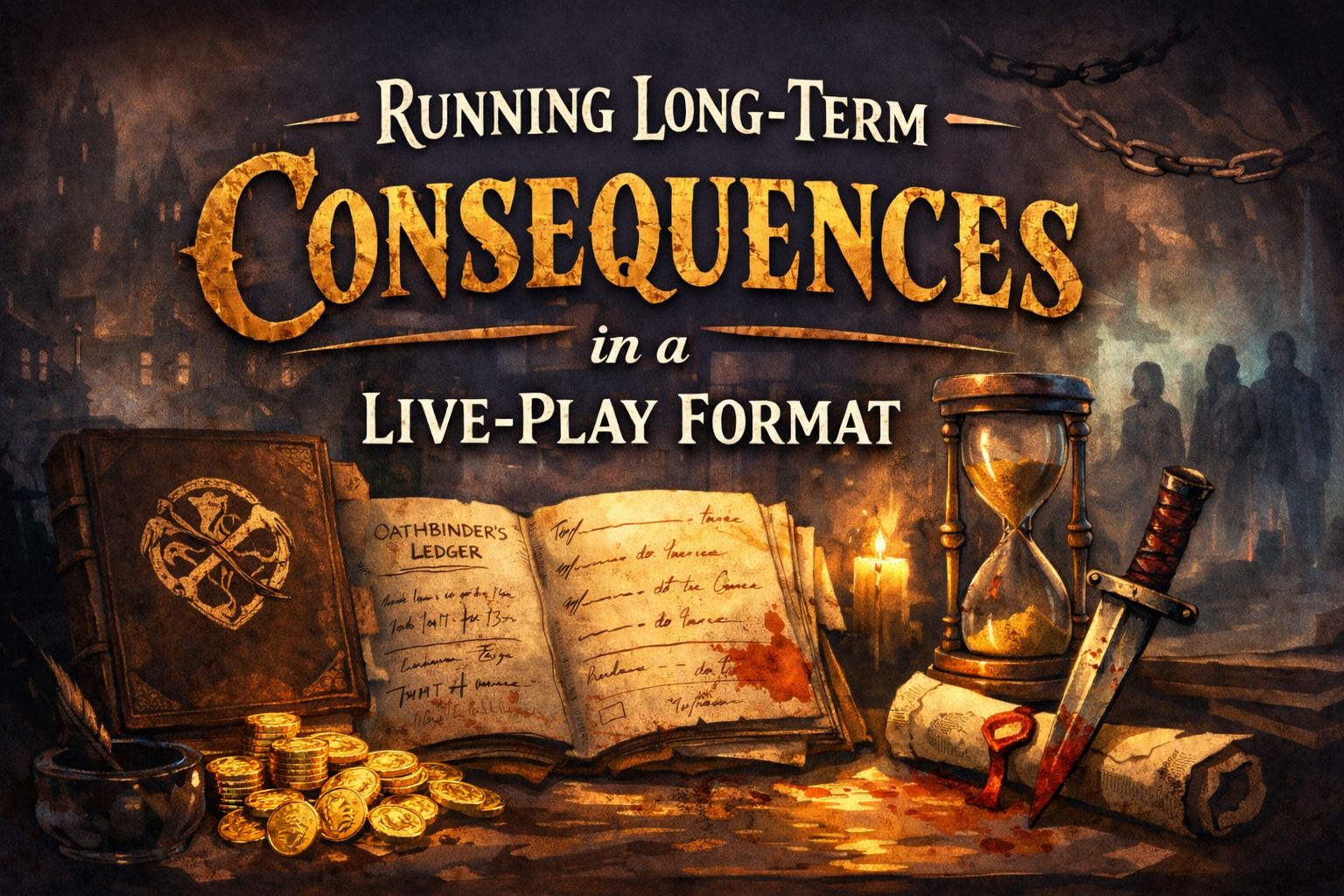
The Oathbinder’s Ledger exists for the same reason our audience keeps watching. It proves that events do not reset. When a character signs their name, betrays an ally, or takes a stand, it becomes a record. That record follows them. It informs future missions, faction responses, and personal arcs.
Callbacks are the second pillar. Viewers love recognition. When an NPC references a past failure, or a city reacts to an earlier disaster, the audience feels rewarded for paying attention. It turns passive watching into participation. They start keeping mental notes. They anticipate fallout.
For the players, callbacks build trust. They learn that you are listening. They learn that clever play matters. They also learn that mistakes are not erased by time or editing. This trust is essential in a live-play format where performance pressure already exists.
Continuity also protects tone. In a dark fantasy setting like Virelios, ignoring consequences breaks immersion immediately. Magic leaves scars. Power reshapes politics. Factions remember insults and debts. If those threads disappear between episodes, the world collapses into convenience.
The hardest part is restraint. Not every consequence needs to explode on screen. Some should simmer. Some should wait ten episodes. Long-term play rewards patience. When the payoff finally lands, it lands harder because the audience remembers where it started.
Running long-term consequences is work. It requires tracking. It requires discipline. It requires saying no to easy resets. But it is also the reason a live-play story feels alive instead of episodic.
If your world remembers, your audience will believe.
And belief is what keeps them coming back.
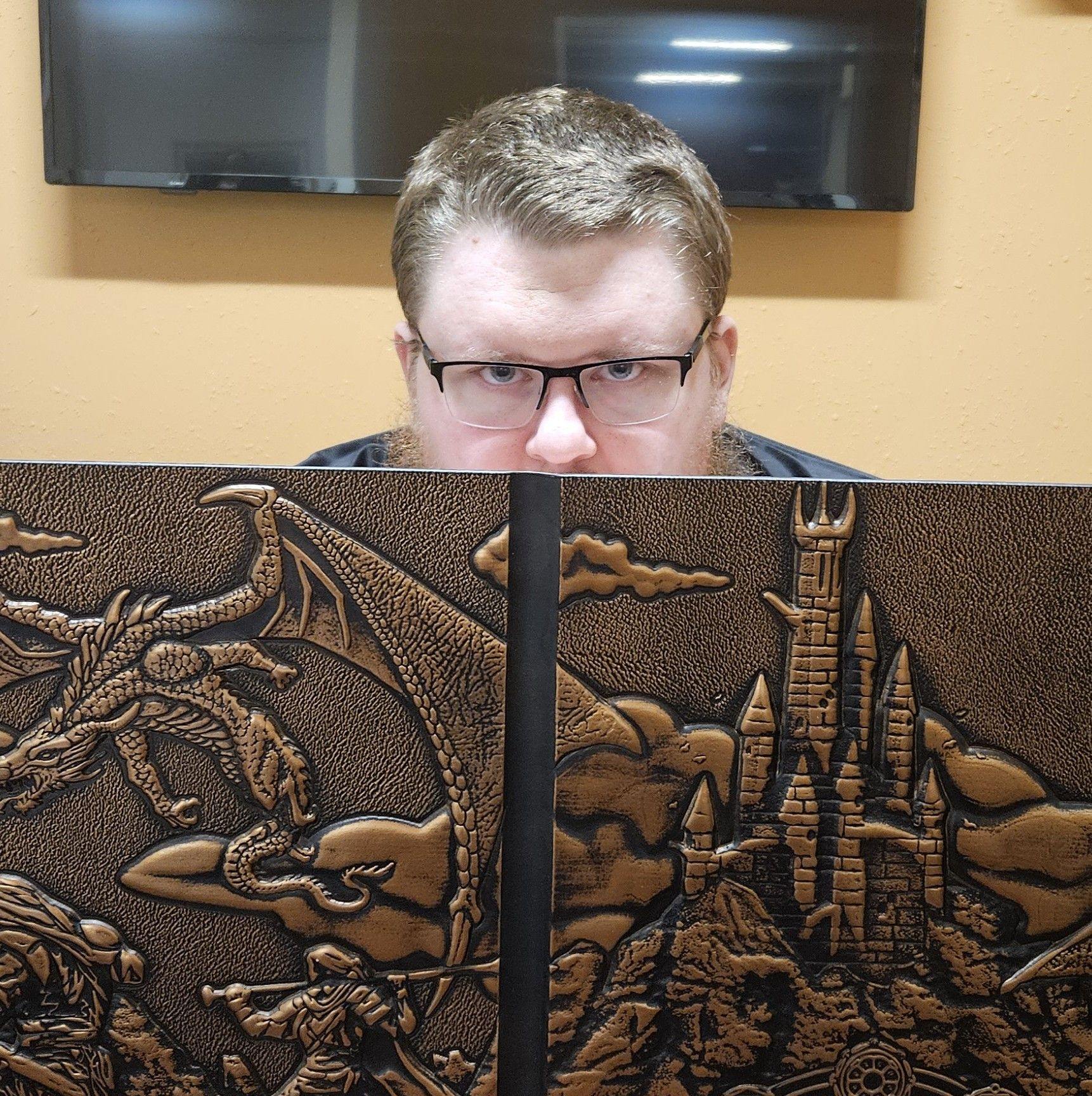
Host & Creator of Crit Happens
He is a lifelong gamer with a strong love for immersive worlds and shared experiences. He spends a lot of time in Fortnite for fast, competitive chaos, Baldur’s Gate III for deep storytelling and meaningful choices, and Phasmophobia for its tense teamwork and atmosphere. He is a huge nerd at heart and enjoys getting lost in lore, systems, and the small details that make games feel alive.
Music plays a constant role in his life. His taste pulls from many genres and moods, shifting with the moment rather than sticking to a single style. If a song has energy or emotion, it earns a place in his rotation.
He is a first time Dungeon Master running his first full campaign. Learning how to guide players, manage rules, and build memorable moments has been both challenging and deeply rewarding for him. At his core, he values connection. He loves meeting new nerds, sharing stories, and building community around a shared love of games and tabletop storytelling.
Why Community Matters More Than Numbers