Designing High Risk D&D Missions Without Killing Momentum
High risk missions sound appealing until the table freezes. Stakes rise, tension builds, and suddenly players hesitate. Every choice feels dangerous. Every pause stretches. Momentum dies not from failure, but from fear.
Crit Happens learned early that danger alone does not drive play. Structure does.
In Virelios, risk exists before the party arrives. Conflicts burn already. Factions hold leverage. The world moves whether agents intervene or not. High risk missions succeed when players step into motion rather than trying to start it themselves.
That idea shapes every Syndicate contract.
A Scalebound Syndicate mission never asks players to solve everything. It asks them to enter an unstable situation, complete a clear objective, and survive the fallout. This clarity keeps momentum alive even when the danger escalates.
Every high risk mission in Virelios begins with three anchors. Objective. Pressure. Consequence.
The objective stays narrow. Retrieve an artifact. Sabotage a negotiation. Extract a living asset. This focus keeps players oriented when the world starts pushing back. Side paths exist, but the mission remains legible at all times.
Pressure comes from the environment, not the Dungeon Master. Timers. Rival factions. Limited resources. Political attention. In the Ashen Belt, pressure often manifests through Dominion patrol schedules, truth wards, and restricted movement. In the Verdant Rift, pressure arrives through unstable terrain, illusion drift, and memory distortion. These forces act consistently and visibly, which lets players plan under stress instead of guessing intent.
Consequences remain persistent but proportional. A failed stealth check might escalate security rather than end the mission. A broken alliance might lock future access rather than trigger immediate combat. This approach allows danger to build without cutting momentum short.
Mechanically, high risk missions rely on layered checks instead of single pass or fail moments. Skill challenges in Virelios rarely resolve success outright. They shift position. A failure might add heat, drain resources, or introduce a new complication. Success buys space, time, or leverage.
The Oathbinder’s Ledger reinforces this structure. Contracts track outcomes beyond gold. Reputation shifts. Clauses update. Future offers change. Players see consequences recorded in writing, which reinforces weight without stopping play.
Lore supports mechanics at every step.
Faction response tables replace improvisational punishment. The Dominion of Fahlreach reacts to exposure, not morality. The Watchers Beneath respond to disruption of memory sites. The Hollow Host responds to erased names and forgotten acts. These reactions follow internal logic, which keeps outcomes predictable even when dangerous.
High risk missions also avoid binary endings. Success and failure exist on a spectrum. Partial extraction still changes the world. A destroyed treaty still leaves survivors. An artifact recovered late still draws attention. Momentum survives because story continues regardless of outcome.
Combat design follows the same philosophy. Encounters escalate through environment and reinforcements rather than sudden difficulty spikes. Players see the danger rising. They decide when to press forward or withdraw. Choice remains intact under pressure.
Importantly, high risk does not mean constant threat. Downtime exists inside missions. Brief windows of safety allow planning, roleplay, and recalibration. These moments reset pacing without resetting consequence.
In Virelios, fear works best when players understand it. Unknown danger paralyzes. Known danger motivates.
The Dungeon Master’s role stays restrained. The world responds. The mission unfolds. Dice land where they land. Intervention remains minimal because structure does the heavy lifting.
This design philosophy keeps momentum alive even when stakes climb. Players act because they understand the cost of delay as clearly as the cost of action.
High risk missions thrive when pressure moves the story forward instead of blocking it. When objectives stay clear. When consequences persist without punishing curiosity.
That balance defines Crit Happens. It defines the Syndicate. It defines how Virelios breathes under stress.
Danger does not slow the game.
Unclear danger does.
Design for clarity. Let the world apply pressure. Let the players decide how much they are willing to carry forward.
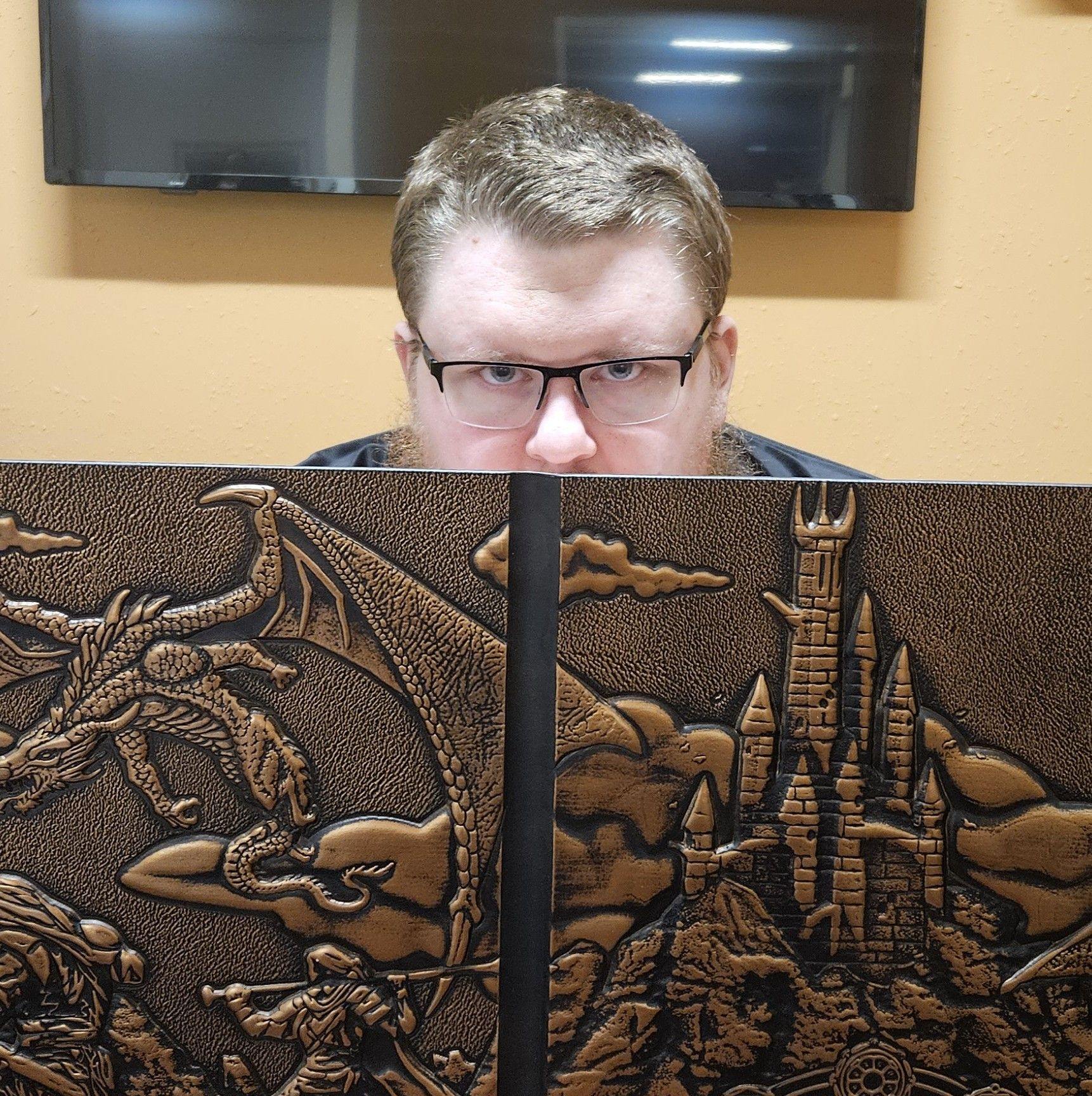
Host & Creator of Crit Happens
He is a lifelong gamer with a strong love for immersive worlds and shared experiences. He spends a lot of time in Fortnite for fast, competitive chaos, Baldur’s Gate III for deep storytelling and meaningful choices, and Phasmophobia for its tense teamwork and atmosphere. He is a huge nerd at heart and enjoys getting lost in lore, systems, and the small details that make games feel alive.
Music plays a constant role in his life. His taste pulls from many genres and moods, shifting with the moment rather than sticking to a single style. If a song has energy or emotion, it earns a place in his rotation.
He is a first time Dungeon Master running his first full campaign. Learning how to guide players, manage rules, and build memorable moments has been both challenging and deeply rewarding for him. At his core, he values connection. He loves meeting new nerds, sharing stories, and building community around a shared love of games and tabletop storytelling.
Why Community Matters More Than Numbers