Creative Swerves and Letting the Story Rewrite You
Every Dungeon Master starts a campaign with expectations. You sketch arcs, imagine endgames, and quietly place narrative pins on a board that only you can see. You tell yourself that you are flexible, that you will follow the players wherever they go, but somewhere in the back of your mind there is still a version of the story that feels “right.”
And then a creative swerve happens.
In Crit Happens, Nyros was never meant to be the villain. Not even close. He was designed as a pillar character, a moral compass, someone whose choices would anchor the party when the world of Virelios began to crack. His role was supposed to be stabilizing. Dependable. A force that pushed back against the chaos rather than becoming part of it.
The table had other plans.
What unfolded was not the result of a single bad decision or a sudden heel turn. It was a slow accumulation of pressure. Conflicting loyalties. Compromises made in moments that felt necessary at the time. The kind of choices players make when they are trying to protect something they care about while the world keeps demanding more. The party reacted. Factions reacted. The setting reacted. And eventually, the story bent.
That bend was not scripted. It was earned.
As a DM, this is one of the hardest moments to navigate. When the story begins to move somewhere you did not intend, your instinct is often to correct it. To steer it back. To introduce a consequence or revelation that snaps the narrative into place. That instinct comes from fear. Fear of losing control. Fear of breaking the arc. Fear that the story will become worse if it stops resembling the version you planned.
The truth is usually the opposite.
Creative swerves are not failures of planning. They are proof that the world is alive. They happen when players trust the setting enough to make risky choices and when the DM trusts the table enough to let those choices matter. In Nyros’ case, the transformation into a BBEG did not come from betrayal. It came from conviction. From believing that the end justified the means and discovering, too late, that the means had changed him.
What made this work was collaboration. Jesse did not resist the turn. He leaned into it with care, restraint, and emotional honesty. That kind of player trust is rare and powerful. It requires a DM who is willing to say yes to discomfort and a player who is willing to explore consequences without treating them as punishment. Together, we allowed the story to evolve rather than forcing it to stay recognizable.
From a mechanical standpoint, this kind of shift requires recalibration, not panic. Nyros’ abilities, influence, and presence in the world had to change gradually. Factions began to react differently. Information flowed through new channels. The party’s relationship to him shifted from ally to unknown variable to looming threat. None of that happened overnight, and that pacing is what made it believable.
The key lesson here is that villains do not need origin stories. They need context. When a player character becomes an antagonist, the table already knows their history. The emotional weight is built in. Every past victory and shared loss adds gravity to the conflict. You are not introducing a new enemy. You are reframing an old relationship.
Letting go of your original vision is uncomfortable. It feels like abandoning work you cared about. But tabletop storytelling is not about preserving plans. It is about honoring momentum. When the story swerves, it is usually because something more interesting has emerged. Something that could not exist until the players pushed against the edges of the world you built.
The hardest part is trusting that you do not need to know where it ends.
Nyros was never meant to be the villain. That is exactly why his role as one works. The story did not break when that expectation failed. It deepened. And Crit Happens is stronger for it.
If there is one truth I have learned as a DM, it is this. The best stories are not the ones you protect. They are the ones you allow to change you right along with the table.
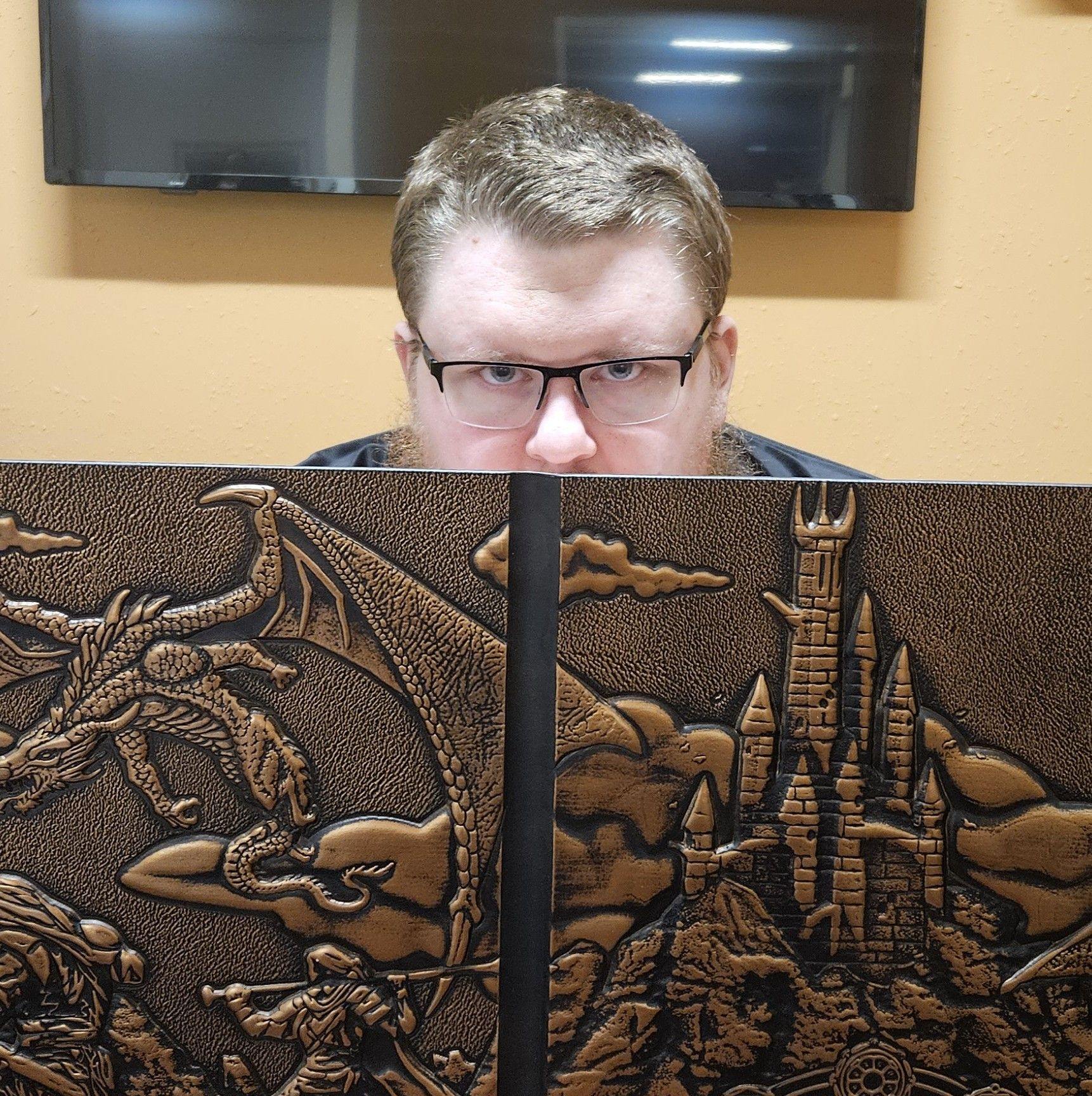
Host & Creator of Crit Happens
He is a lifelong gamer with a strong love for immersive worlds and shared experiences. He spends a lot of time in Fortnite for fast, competitive chaos, Baldur’s Gate III for deep storytelling and meaningful choices, and Phasmophobia for its tense teamwork and atmosphere. He is a huge nerd at heart and enjoys getting lost in lore, systems, and the small details that make games feel alive.
Music plays a constant role in his life. His taste pulls from many genres and moods, shifting with the moment rather than sticking to a single style. If a song has energy or emotion, it earns a place in his rotation.
He is a first time Dungeon Master running his first full campaign. Learning how to guide players, manage rules, and build memorable moments has been both challenging and deeply rewarding for him. At his core, he values connection. He loves meeting new nerds, sharing stories, and building community around a shared love of games and tabletop storytelling.
Why Community Matters More Than Numbers