Burnout, Recovery, and Finding Creative Momentum Again
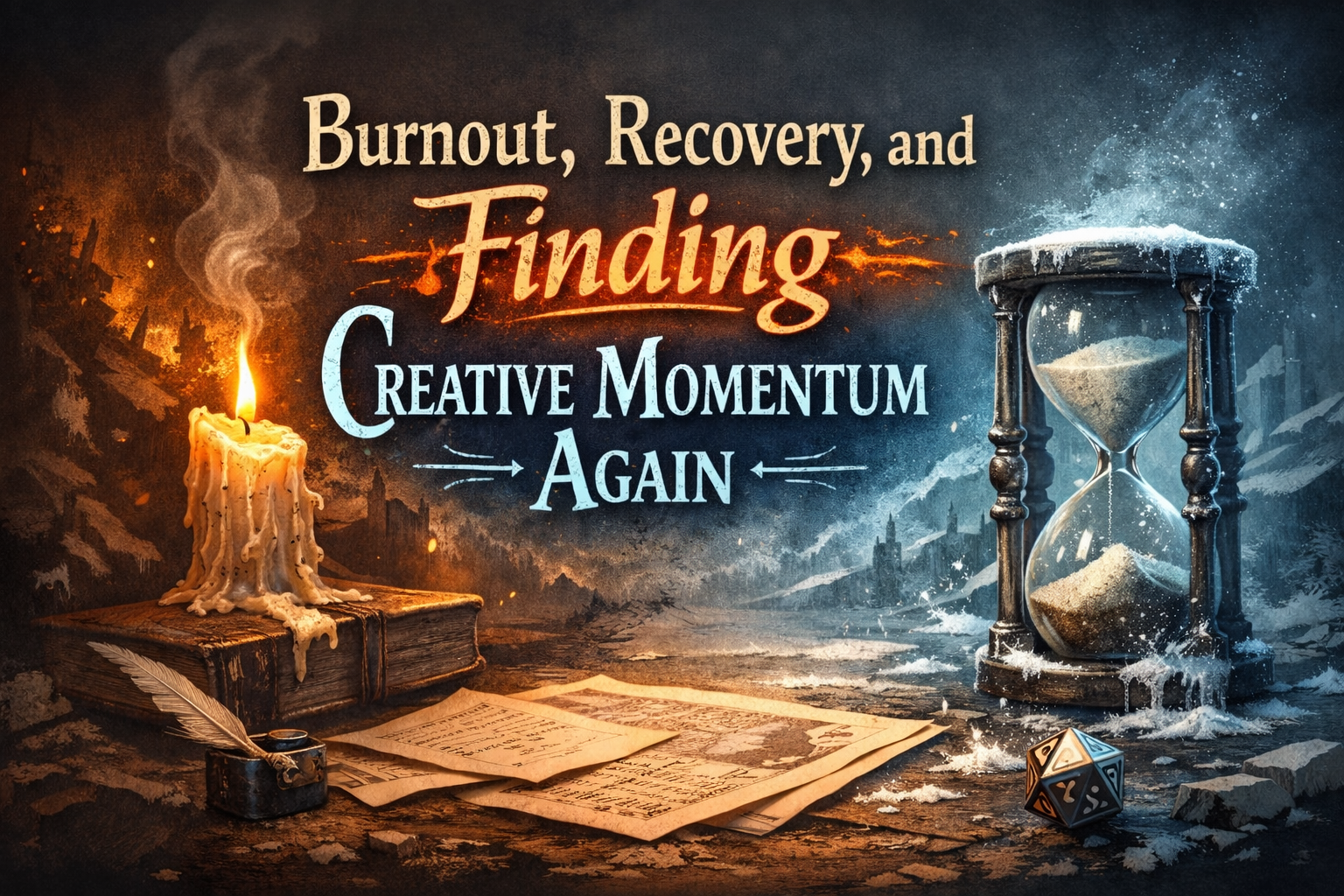
Burnout does not announce itself with a single breaking moment. It creeps in quietly. It shows up as missed prep nights, half finished notes, sessions postponed for reasons you cannot quite explain. For a long time, I thought burnout meant failure or lack of discipline. What I learned, the hard way, is that burnout is usually a signal, not a flaw.
For me, burnout and recovery were inseparable from my health. Pushing too hard, ignoring limits, and treating rest as optional led to consequences far outside the game. When your body forces you to stop, ambition does not matter. Plans do not matter. The only thing that matters is recovery. That experience reshaped how I think about creativity, pacing, and sustainability, both at the table and away from it.
In TTRPG spaces, burnout often hides behind passion. We love the game, so we say yes too often. We prep too much. We promise big arcs before we have the energy to support them. Dungeon Masters feel this pressure especially. You carry the story, the pacing, the world, and the emotional tone of the table. If you treat that load like an endless resource, it will eventually break something.
Recovery starts with permission. Permission to slow down. Permission to scale back. Permission to run smaller sessions, shorter arcs, or even step away for a while. In Virelios, this philosophy shaped the structure of the Scalebound Syndicate itself. Missions are discrete for a reason. Not every story needs to escalate immediately. Not every thread needs resolution right now. The world continues, but it does not demand everything from you at once.
Mechanically, this approach mirrors how momentum actually works in play. Consistency beats intensity. A campaign that runs regularly with modest prep survives longer than one built on constant spectacle. Letting players drive scenes, reuse locations, and interact with ongoing factions reduces creative load while increasing narrative depth. Burnout often comes from trying to outdo yourself every session instead of letting the world breathe.
Rebuilding momentum after burnout is not about forcing inspiration. It is about creating conditions where inspiration feels safe again. Low stakes prep. Familiar NPCs. Revisited locations. Systems you trust. When I returned to creative work after my health crisis, I did not start with big reveals or complex mechanics. I started with structure. Schedules I could keep. Goals I could meet. One post. One session. One step forward.
This is where respecting limits becomes a creative strength. Knowing how much you can realistically produce allows you to design within those bounds. It also builds trust at the table. Players sense when a DM is present, grounded, and enjoying the game. They also sense when a DM is exhausted and forcing momentum out of obligation. One leads to shared excitement. The other leads to quiet disengagement.
Burnout does not mean you are done. It means you went too fast for too long. Recovery is not about returning to who you were before. It is about becoming someone who can keep going without breaking. In Virelios, scars matter. They shape how power is used and how stories unfold. The same is true for creators.
Creative momentum is not a sprint. It is a rhythm. Find the pace that lets you show up tomorrow, next week, and next year. That is how worlds survive. That is how stories last.
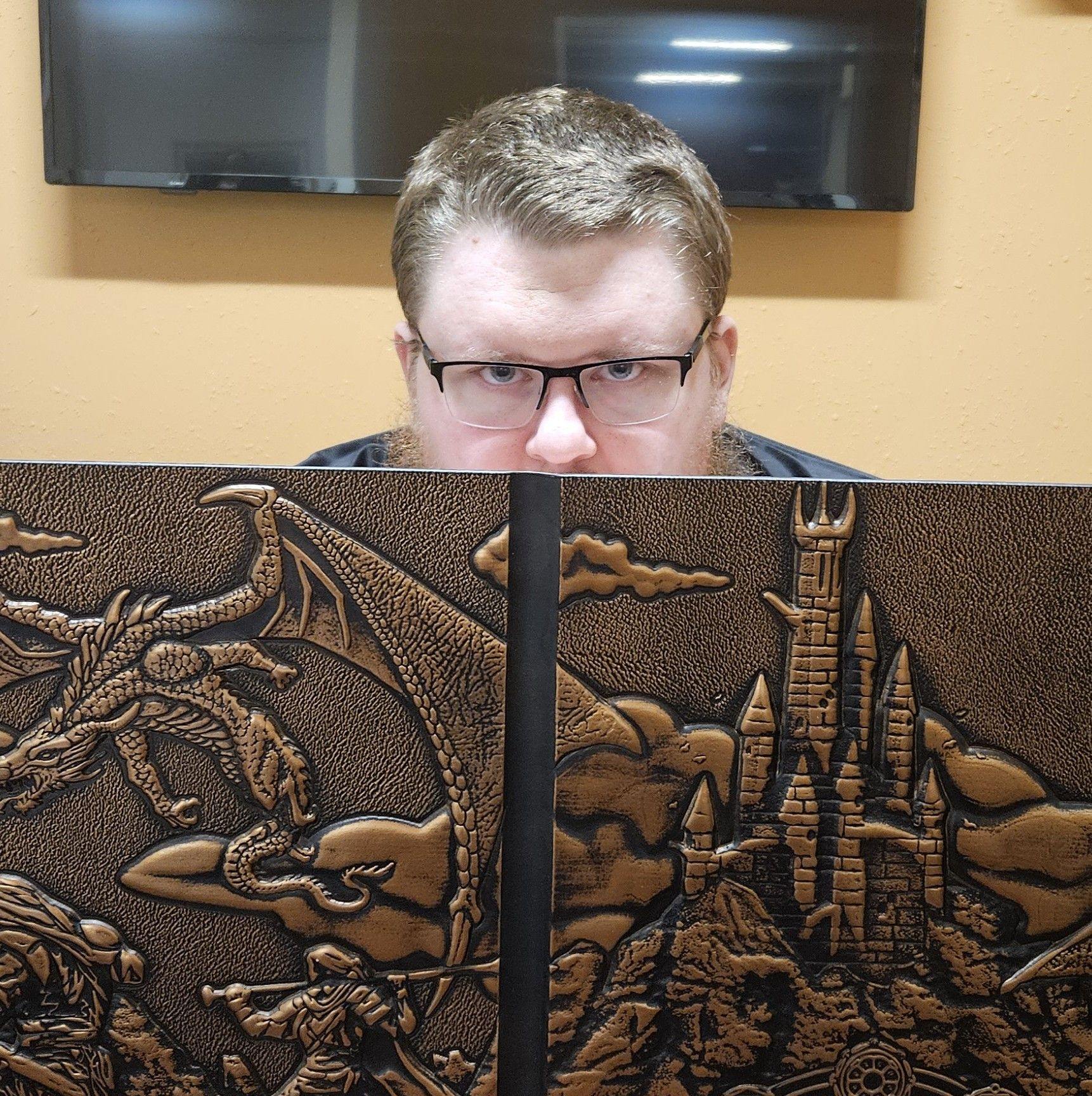
Host & Creator of Crit Happens
He is a lifelong gamer with a strong love for immersive worlds and shared experiences. He spends a lot of time in Fortnite for fast, competitive chaos, Baldur’s Gate III for deep storytelling and meaningful choices, and Phasmophobia for its tense teamwork and atmosphere. He is a huge nerd at heart and enjoys getting lost in lore, systems, and the small details that make games feel alive.
Music plays a constant role in his life. His taste pulls from many genres and moods, shifting with the moment rather than sticking to a single style. If a song has energy or emotion, it earns a place in his rotation.
He is a first time Dungeon Master running his first full campaign. Learning how to guide players, manage rules, and build memorable moments has been both challenging and deeply rewarding for him. At his core, he values connection. He loves meeting new nerds, sharing stories, and building community around a shared love of games and tabletop storytelling.
Why Community Matters More Than Numbers